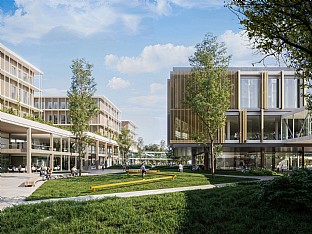
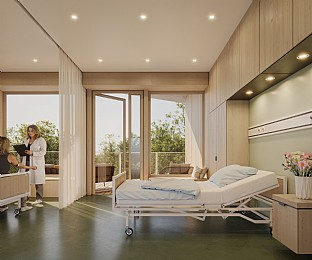
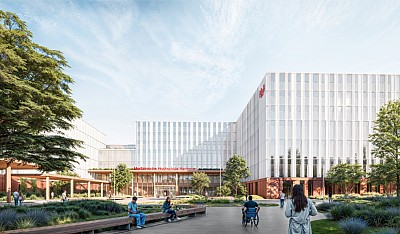
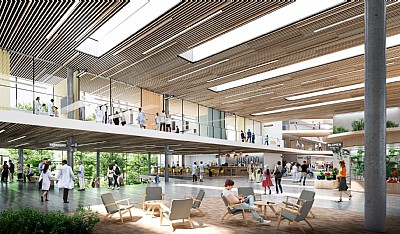
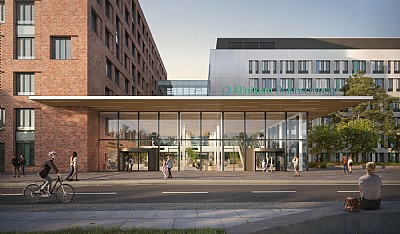
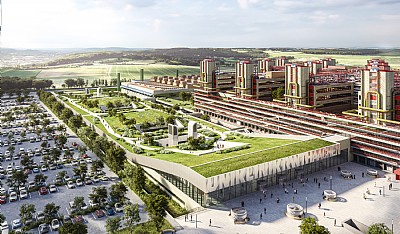
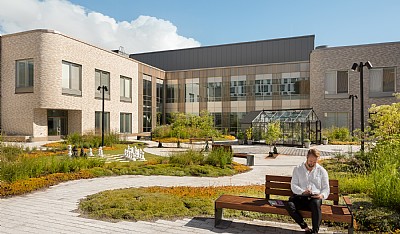
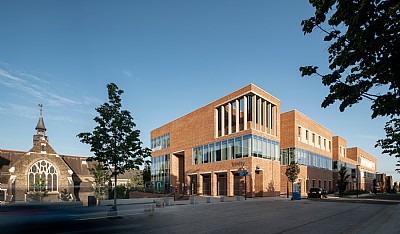
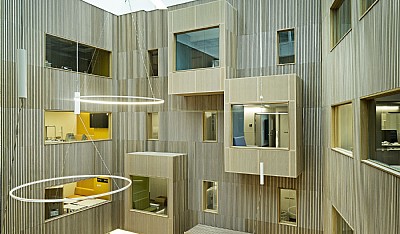
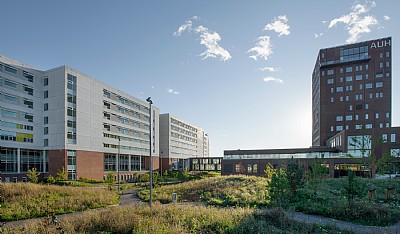
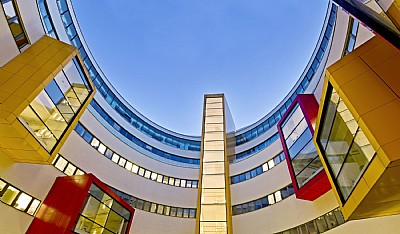
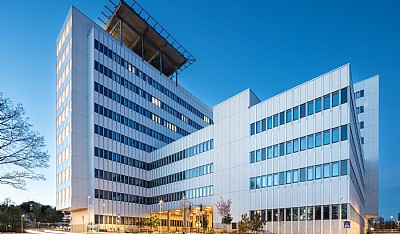
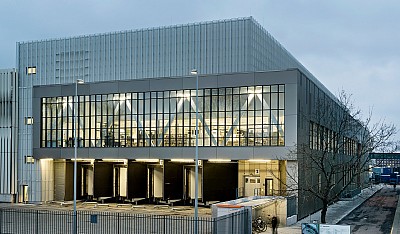
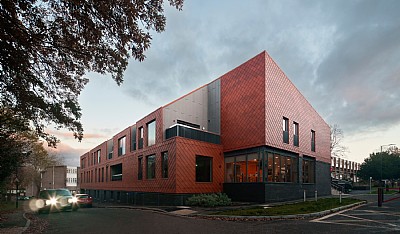
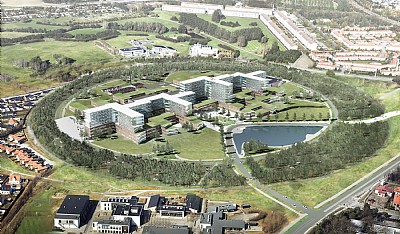
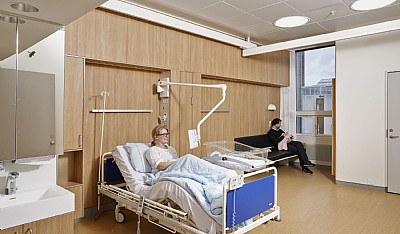
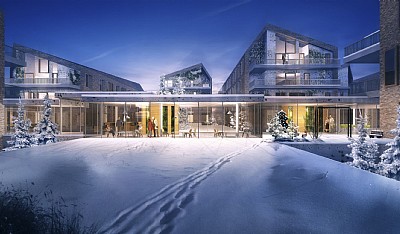
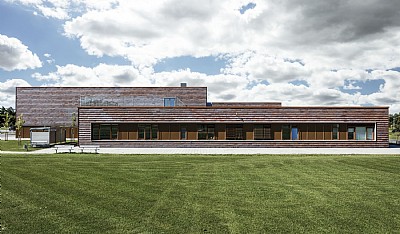
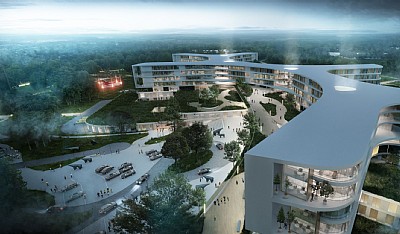
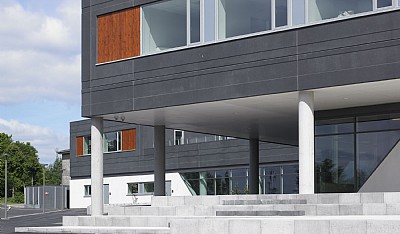
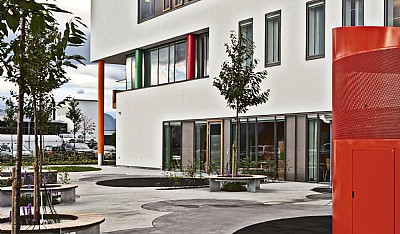
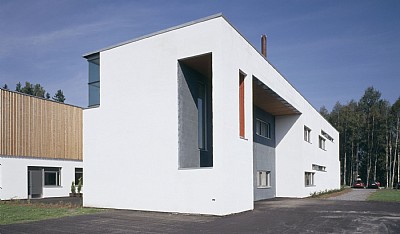
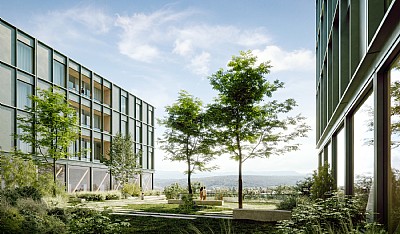
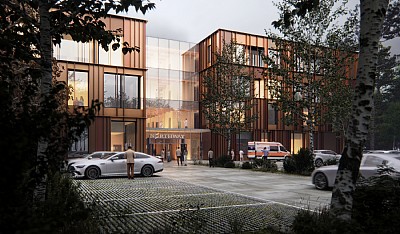
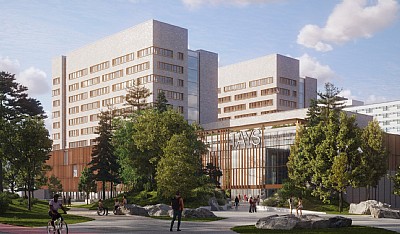
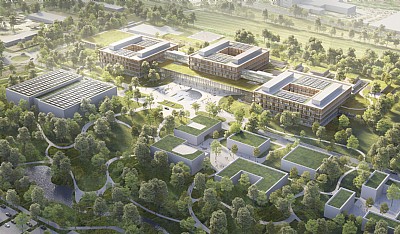
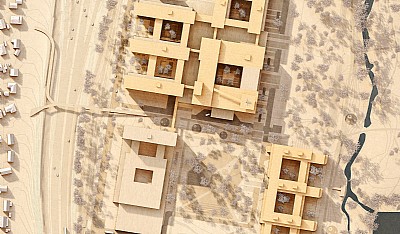
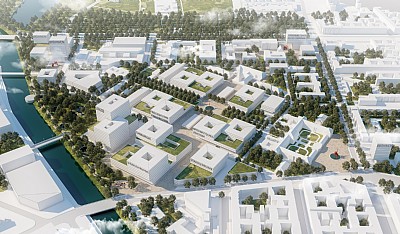
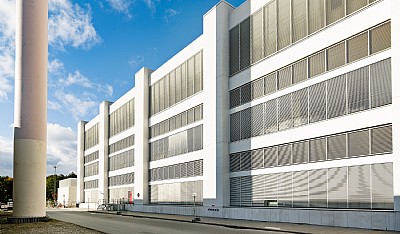
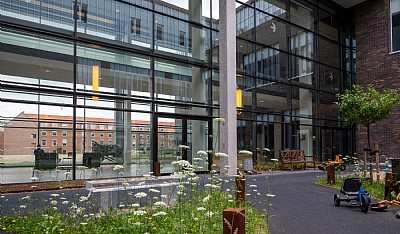
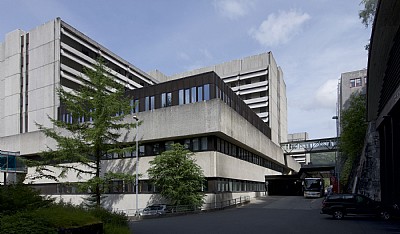
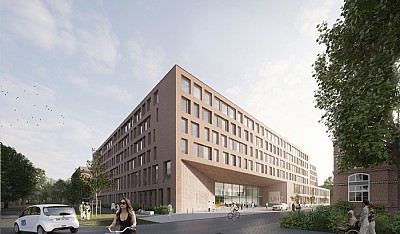
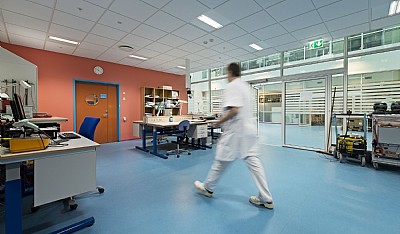
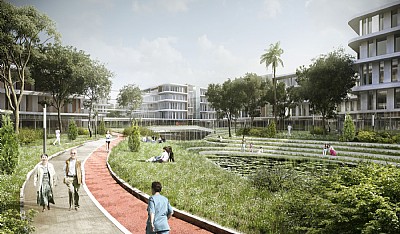
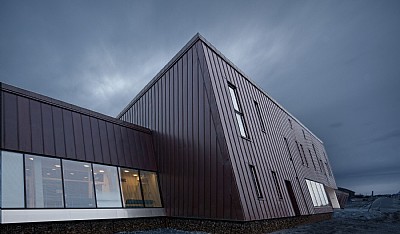
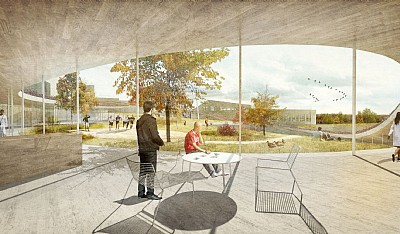
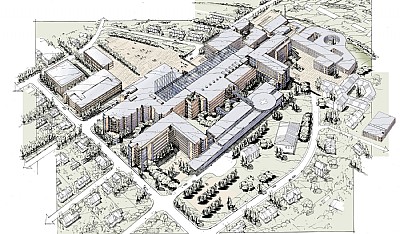
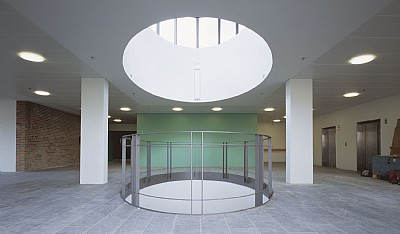
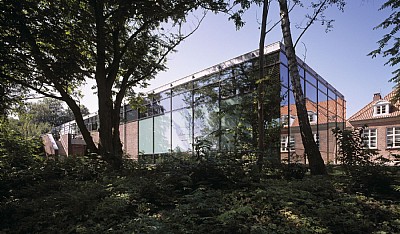
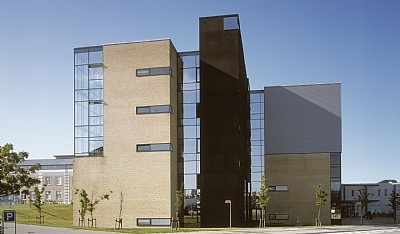
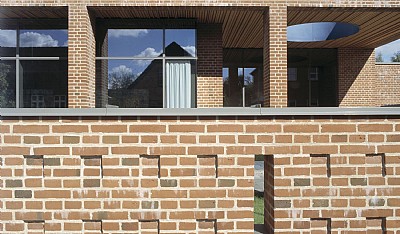
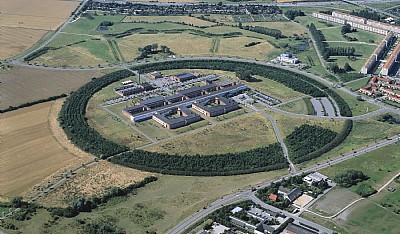
The design for the new BG Klinikum Hamburg building uses the beautiful location on the Geest slope in the Boberg district as a design starting point. By dividing the overall volume into several buildings, the hospital's large-scale program diversity is successfully translated into a small-scale, landscape-embedded structure. A climate-resilient structure that blends gently into the landscape.
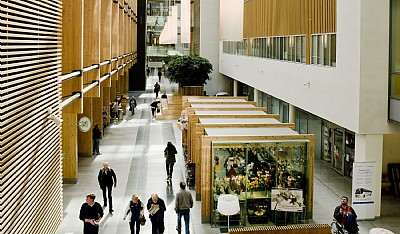
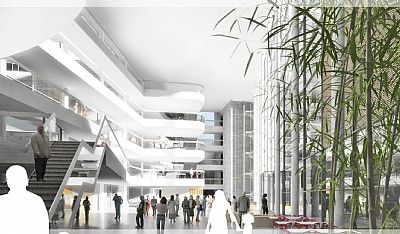
The individual buildings are grouped around a central, landscaped access axis, which serves as a "Healing Path" to the south and a "Public Path" in the center. The functional structure mitigates conflicts of use, simplifies phasing, enables expansion, and meets specific requirements for tranquility, privacy, and social participation.
The topographical situation, with its height difference, is strategically utilized: The connecting basement, with logistics, parking, and supply units, is integrated into the slope. The location of the helipad and the emergency axis at a central hub creates maximum efficiency in treatment.
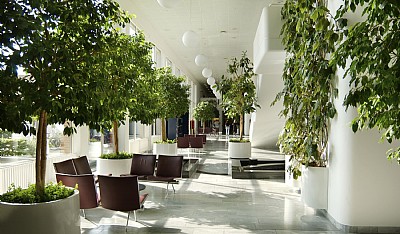
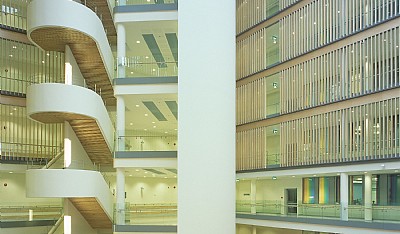
The design is a campus-like structure featuring interconnected elements. The resulting "indeterminate architecture" allows for appropriation and change, thus embracing the long-life cycle of a hospital. The BG Klinikum Hamburg is thus conceived not merely as a functional machine, but as a social, landscape-integrated, and atmospherically effective urban building block for trust, motivation, and healing.