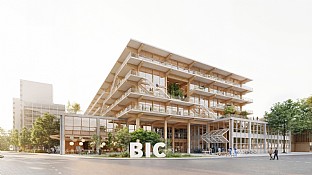
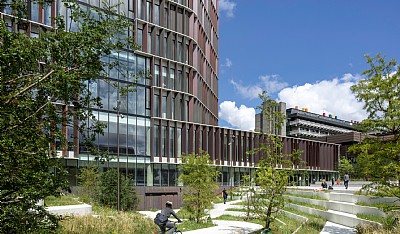
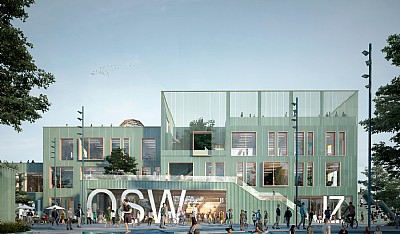
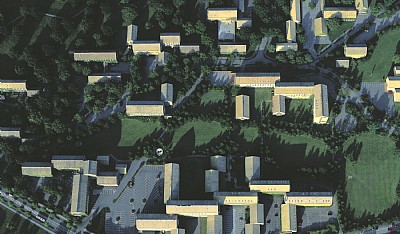
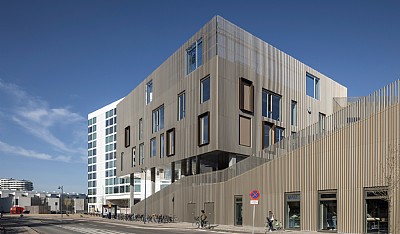
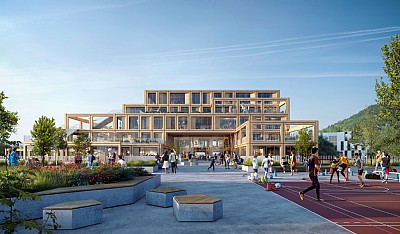
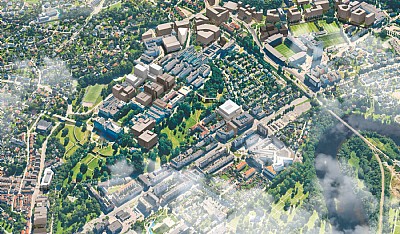
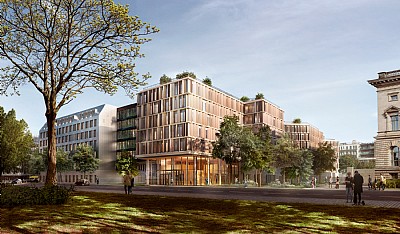
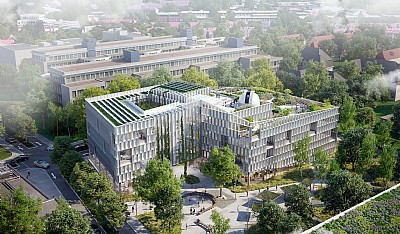
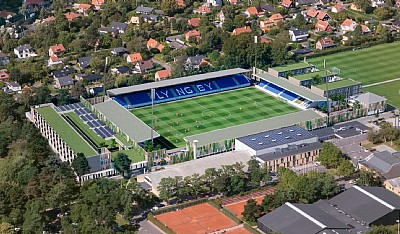
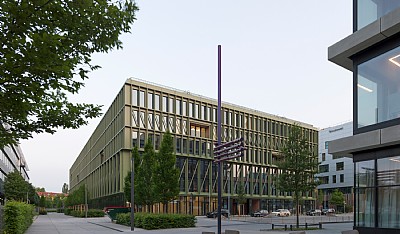
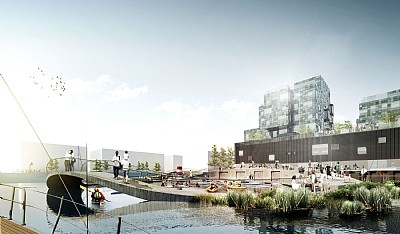
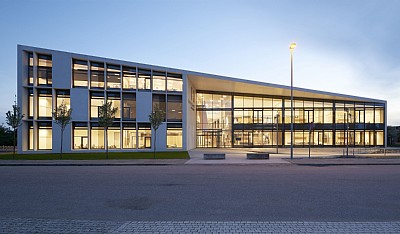
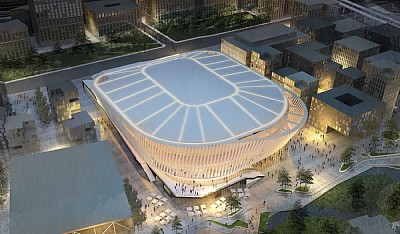
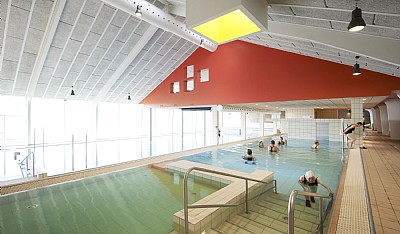
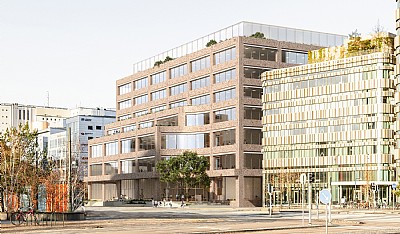
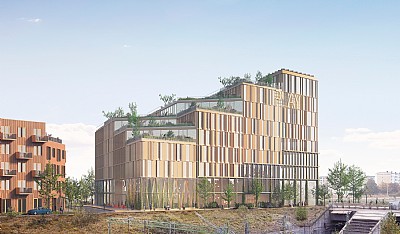
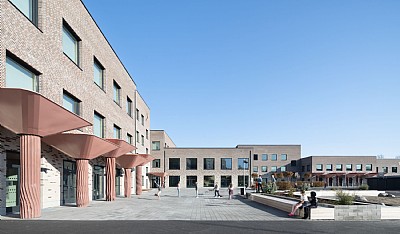
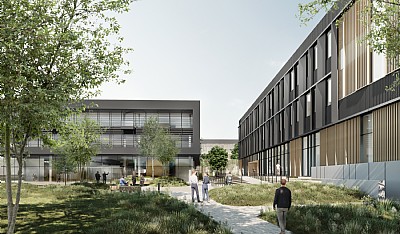
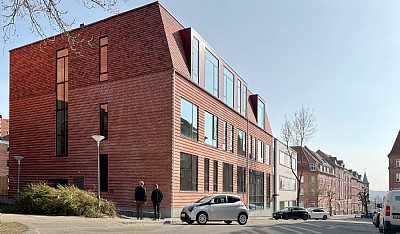
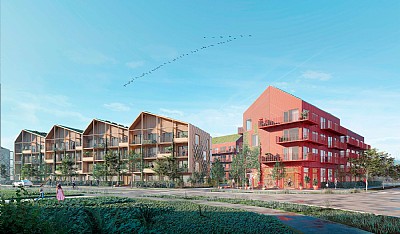
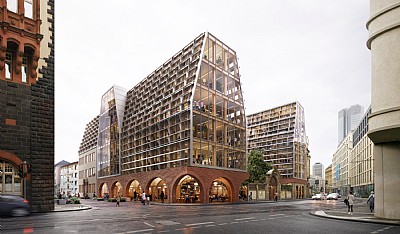
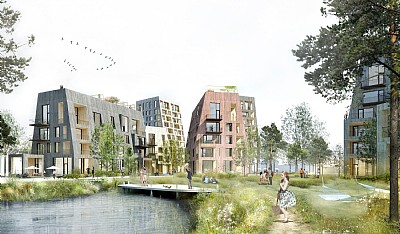
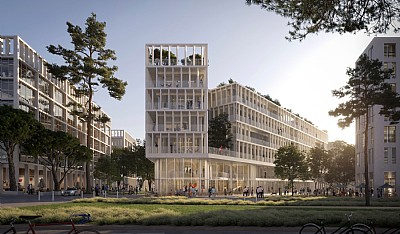
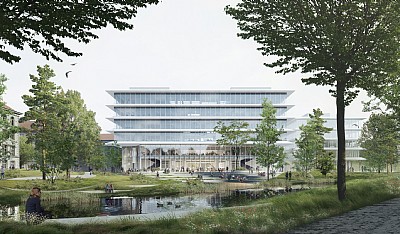
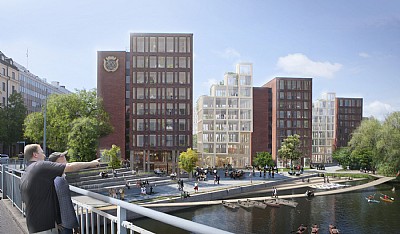
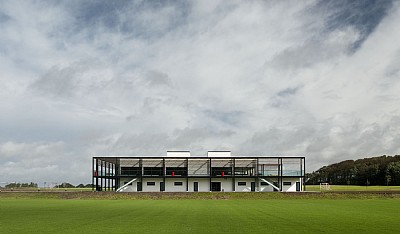
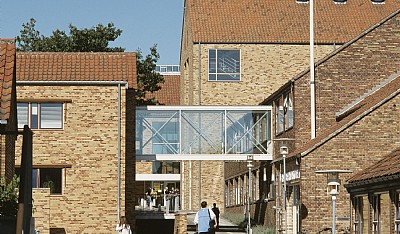
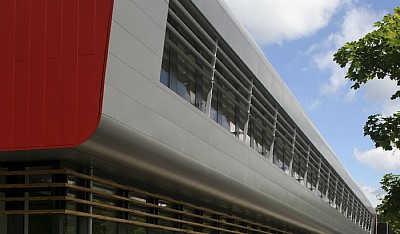
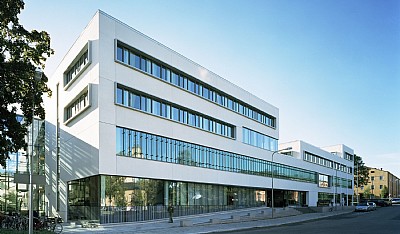
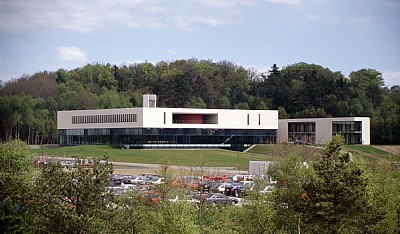
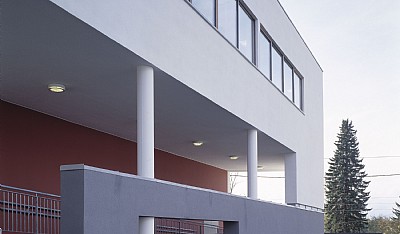
The task was to create a new building for the Berufskolleg für Technik und Gestaltung (BTG) while strengthening connections between education, industry and the surrounding city. The architectural concept responds with a campus structure that links the new educational building with the neighbouring public swimming facility and future sports hall. Clear urban edges, visual axes and direct pedestrian routes organise the site and create a coherent campus environment. The main entrance at the corner of Florastraße and Overwegstraße establishes a visible address towards the city and connects the building to the public realm.
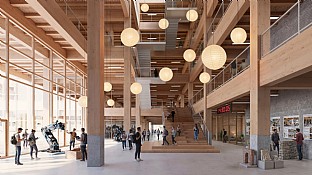
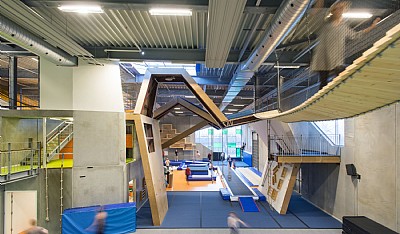
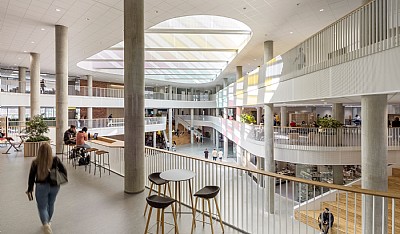
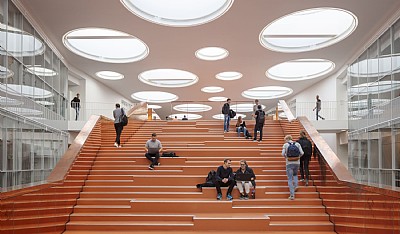
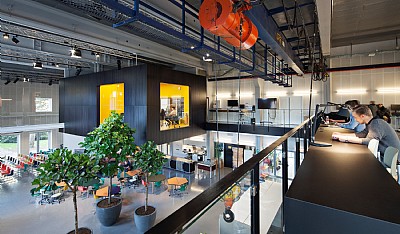
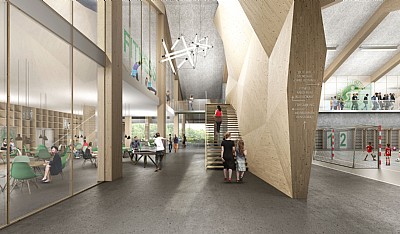
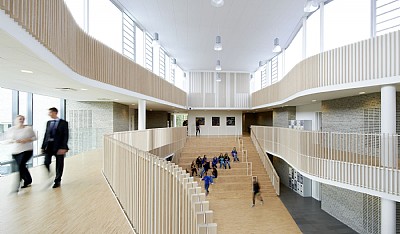
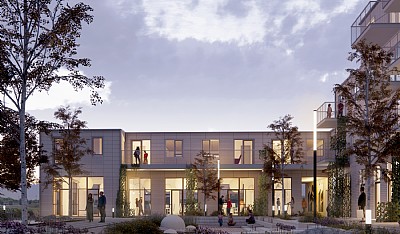
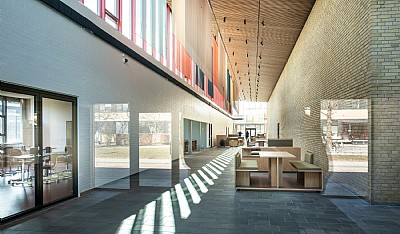
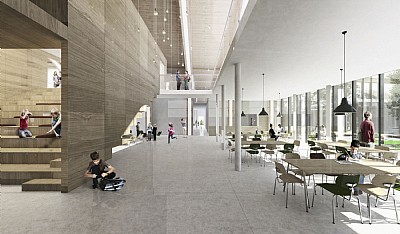
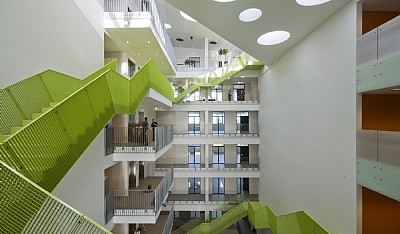
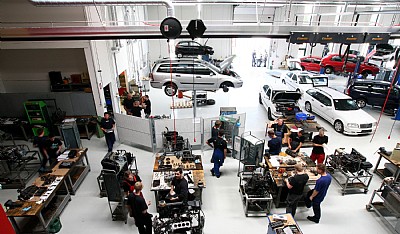
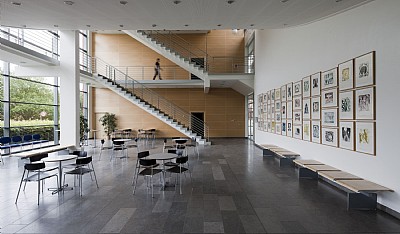
The building is organised around an open ground-floor level functioning as an accessible “anchor”. Public programmes such as workshops, a campus meeting space and a front office are arranged around a large foyer, enabling interaction between students, visitors and external partners. Generous daylight openings and visual connections between floors strengthen orientation and create transparent learning environments. Upper floors contain specialised teaching areas and flexible collaboration zones that allow different learning formats and interdisciplinary work.
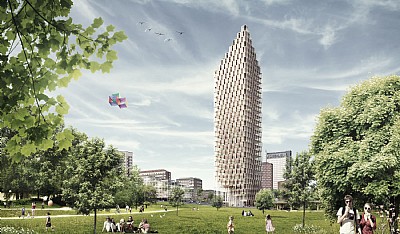
Timber hybrid construction
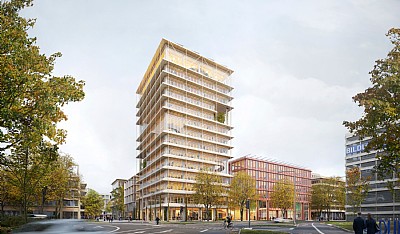
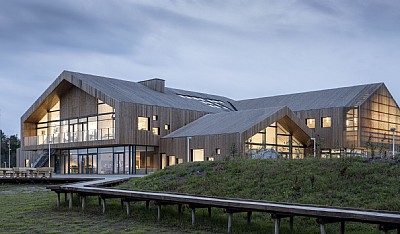
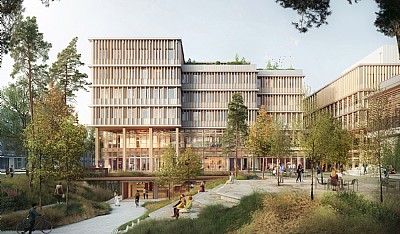
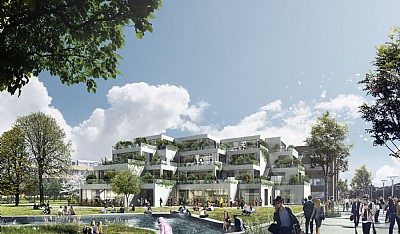
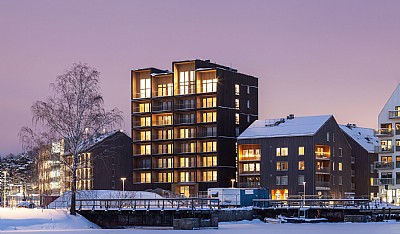
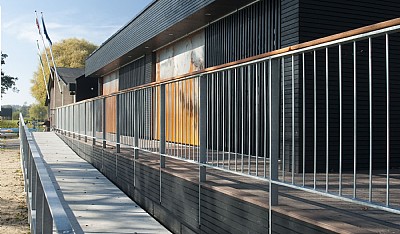
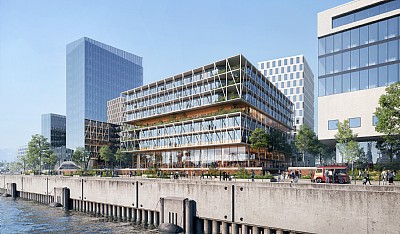
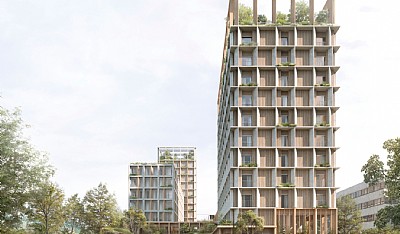
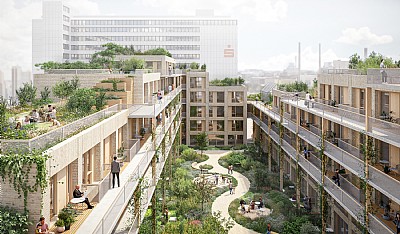
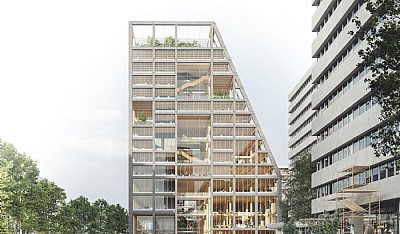
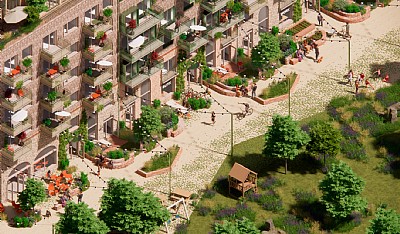
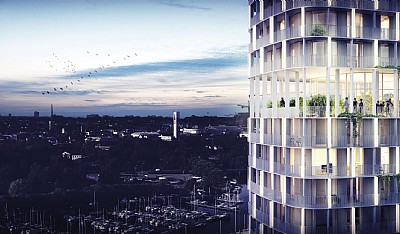
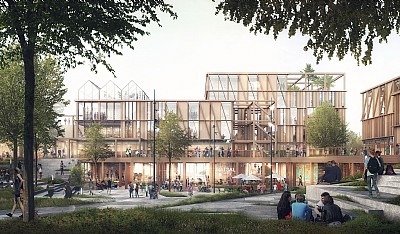
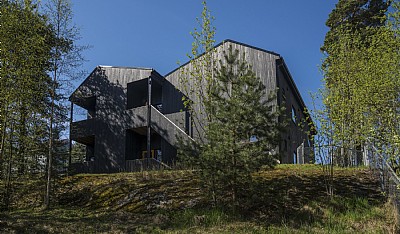
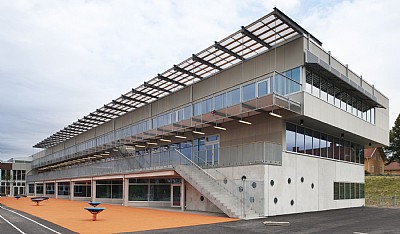
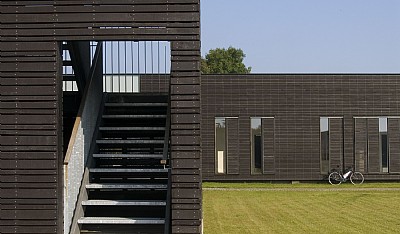
The architecture uses a structural system based largely on timber elements, expressed throughout the interior and façade. The layered terraces step the building volume to mediate between the surrounding urban scales and create accessible outdoor spaces. Large balconies and planted areas support informal learning and social interaction.
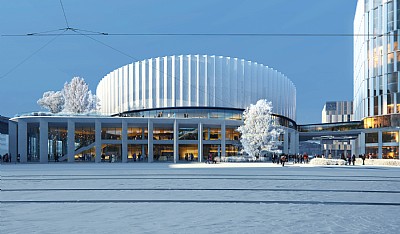
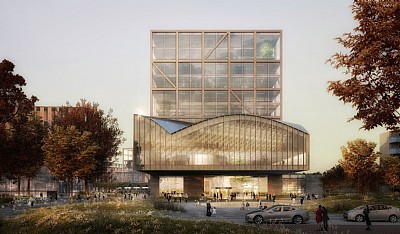
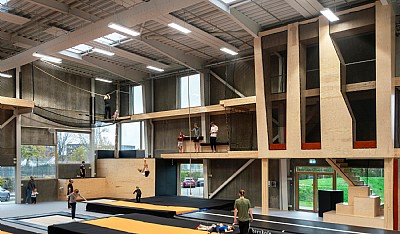
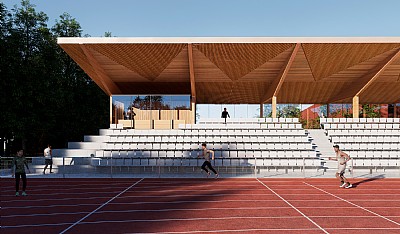
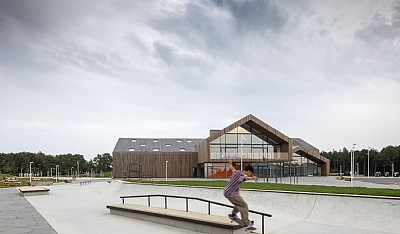
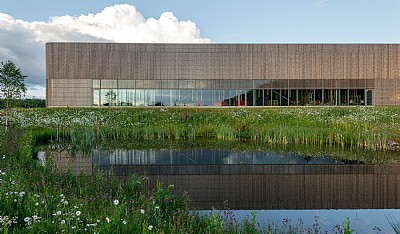
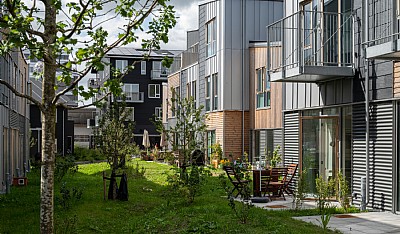
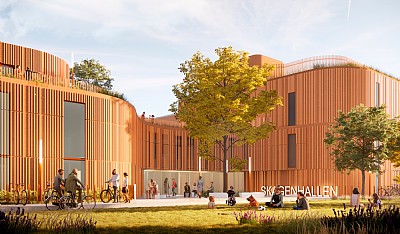
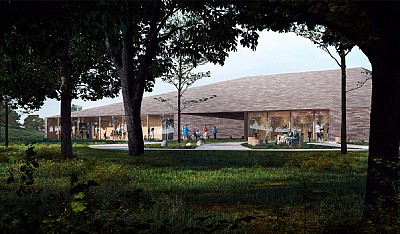
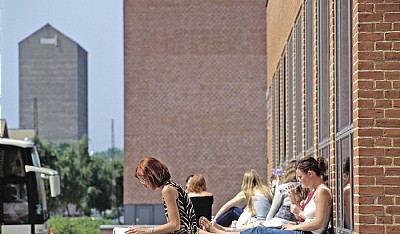
Outdoor spaces are integrated as part of the campus concept. Green islands, planted zones and open pathways improve orientation, connect the buildings and provide areas for meeting and recreation. Workshops and campus facilities on the ground floor extend towards these exterior spaces, enabling flexible use and strengthening the relationship between building and city. A new sports hall in timber-hybrid construction complements the campus ensemble and strengthens the spatial and functional connections between education, sport and public use.
Together, the campus establishes a contemporary educational environment that combines vocational training, innovation and urban accessibility.