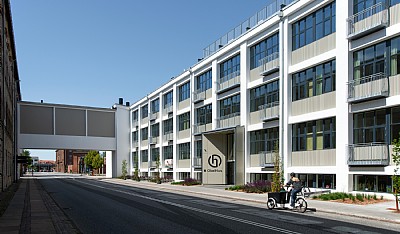
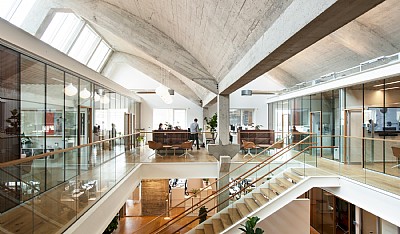
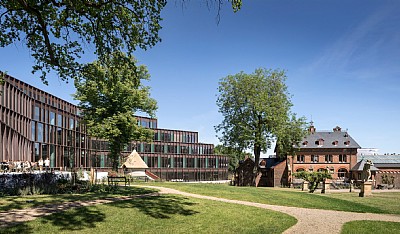
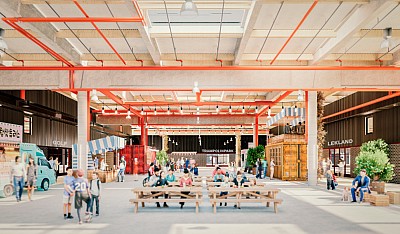
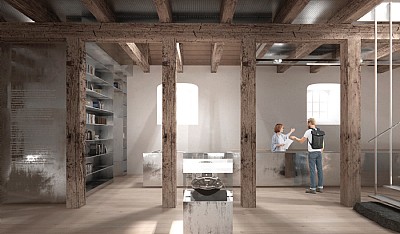
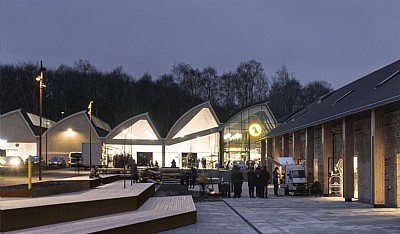
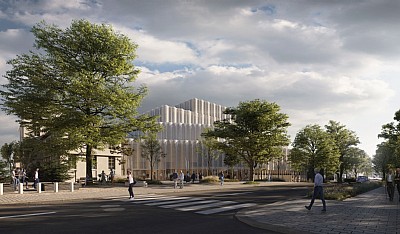
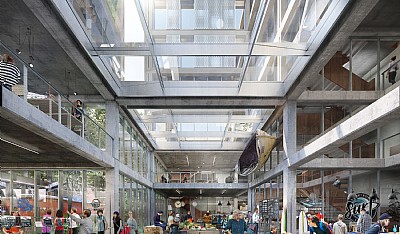
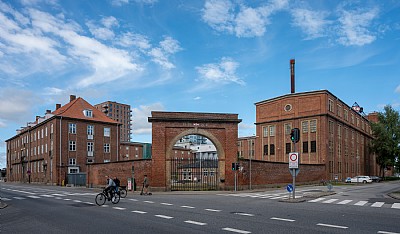
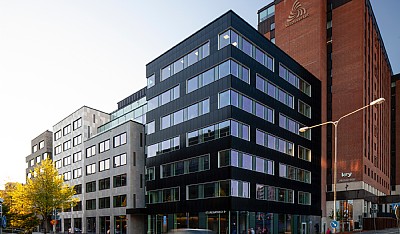
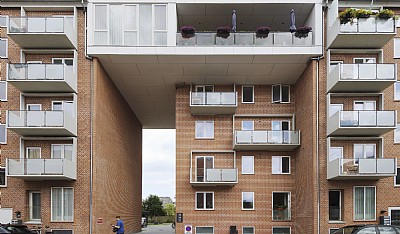
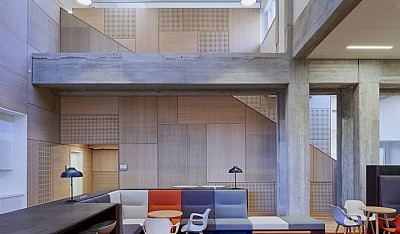
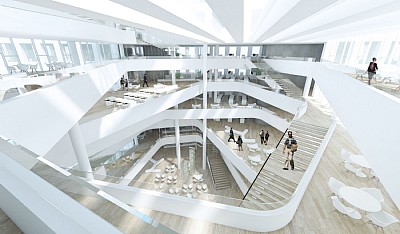
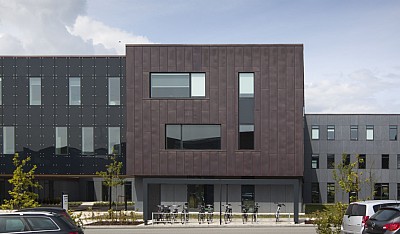
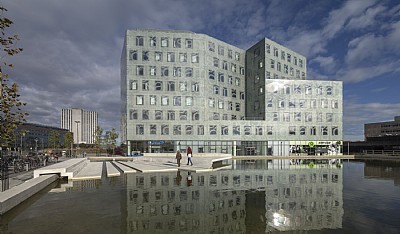
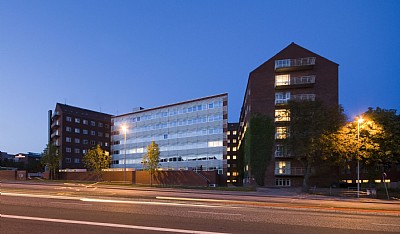
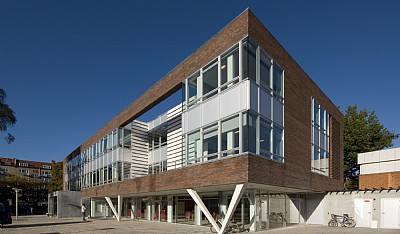
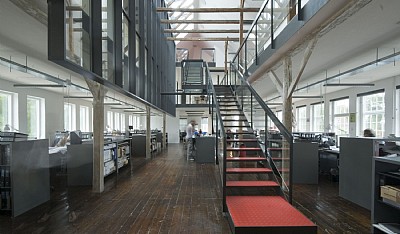
The brief comprised the revitalisation of the historic yellow-brick buildings dating from 1898, which for a period served Aalborg University, and their adaptation to an entirely new use for Aalborg Municipality. The architectural strategy has been to respect and reinforce the industrial character of the buildings whilst elevating them to a contemporary standard through robust, flexible structures and clear wayfinding interventions. The original qualities – generous floor-to-ceiling heights, sawtooth roofs, a rhythmic and repetitive façade pattern, and solid materials – have been retained as defining elements of the design.
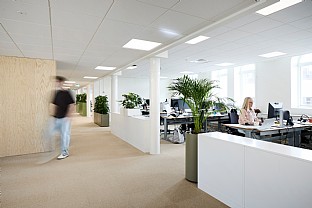
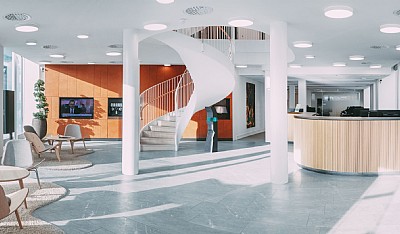
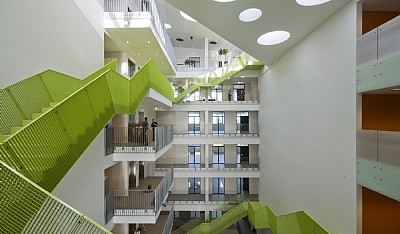
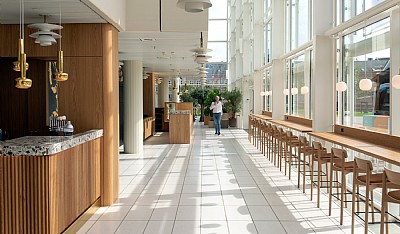
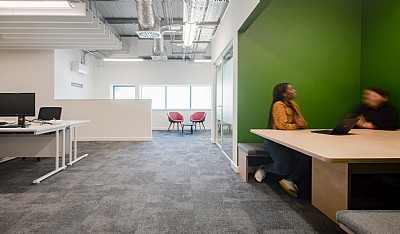
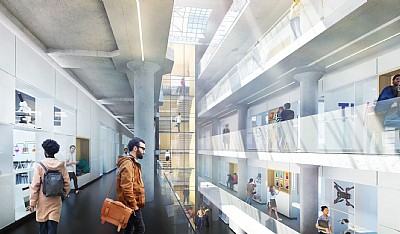
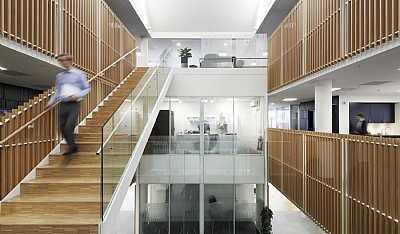
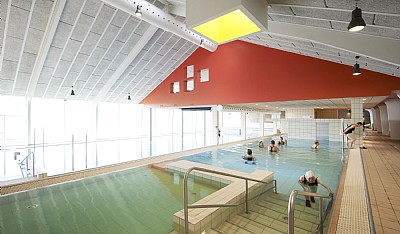
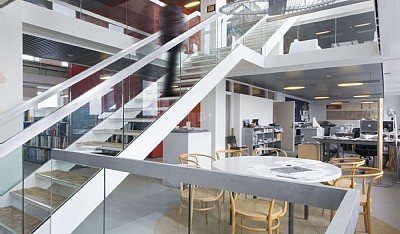
At building level, each floor is organised around a distinct function, yet unified by strategically positioned stair cores. These serve as key spaces accommodating shared facilities such as WC cores and larger meeting rooms, thereby minimising the net area required and ensuring optimal utilisation across user groups. The uppermost floor houses the Centre for Mental Health, where intimate consultation rooms are combined with large, light-filled training spaces beneath the restored sawtooth roofs. The floors below accommodate offices, a fitness suite for residents with reduced mobility, teaching rooms fitted with ceiling hoists, and shower and changing facilities. At ground-floor level, Citizen Services, clinical facilities, and a shared canteen oriented towards the courtyard are established.
User Involvement and Planting
The material palette is consistently maintained as a simple, harmonious expression, enabling differentiated identities to exist within a coherent whole. User involvement has been central to the process and has ensured a well-balanced outcome across a wide range of stakeholders.
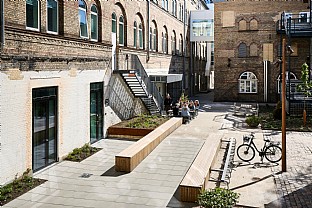
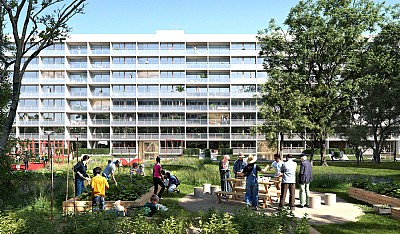
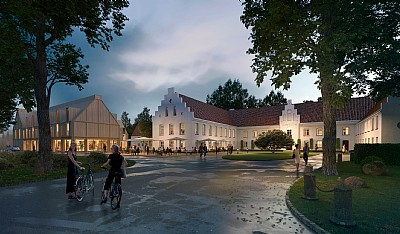
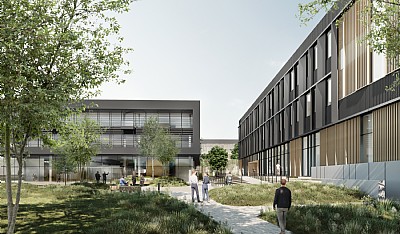
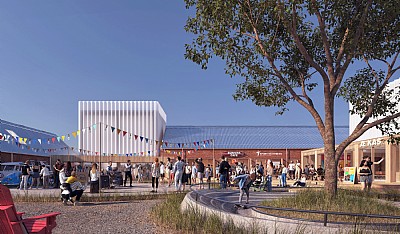
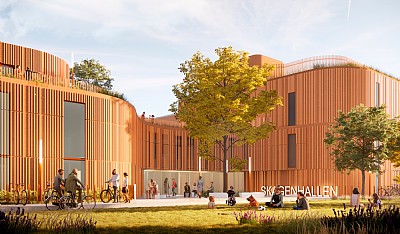
An internal courtyard has been transformed into a green amenity and arrival environment, where cars are replaced by bicycles and planting is actively employed to support a healthy and recreational urban space. Functional requirements relating to access, logistics, and dwell time are balanced against a maximised green profile and an improved microclimate.